


A GRIEF SHARED -5 Years in the After
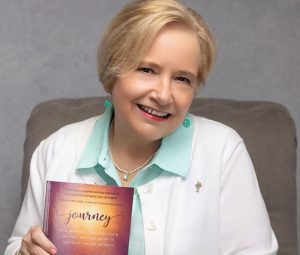
This article was written by Dr. Lynda five years after the death of her daughter, Maria-Victoria at age 13. It was published in numerous professional journals, was adopted as an article to share with new members of Compassionate Friends chapters and received nationwide attention as it was shared throughout the United States and Canada. This article was the beginning of her decision to write the book Journey, to document how it feels with the loss of a child over a span of nearly 30 years, as well as helping professionals know how to help the bereaved.
This will not be the typical article you often see in a professional publication. There will be no references to scholarly works, no discussion of what has been gleaned from years of research, no statistics, no methodology. Rather, this will be a story from the heart, one that I hope may help psychologists first understand, and then do what they do best. I had the inspiration to write this article just a week or so before the tragedy in New York. In my frame of reference, following the horror at the World Trade Center and Pentagon and in Pennsylvania, perhaps this is divine inspiration – this is something I just must do.
What is it like to live through such a profound grief, to have your whole life changed in an instant, to have much of your future taken away, and to find yourself in a world that you don’t recognize? We have all had at least a taste of this, as Americans, our lives have been changed by these events. There is a loss of a sense of security and for what we thought our future would be. But what about those people who have sustained a more profound and excruciating loss – the loss of a loved one who was treasured and so much a part of the fabric of your very life. What is it like to have that person taken away so abruptly, to one minute have that loved one beside you as a part of your dream, and the next to have that love ripped away from you? What do psychologists and other helping professionals need to know in order to help those who have sustained such a loss?
This story is very personal for me and, therefore, somewhat difficult to tell. As many of you know, my daughter, Maria-Victoria, was killed in an automobile accident just three blocks from my home as her brother was driving her home from school. A speeding driver ran through a red light and smashed into their car killing Maria-Victoria instantly. She was 13 years old. It was a normal day, bright and sunshiny and my life was going along as normal. My daughter was a beautiful, intelligent and accomplished person known for her extraordinary kindness and compassion for others. She was innocence and pure love blossoming into a leader of others and she was building the confidence that could have taken her very, very far in this life. In one second, she was here, in one second, she was not. The fifth anniversary of her death was just 2 days after the New York tragedy.
Within a few months of her passing, I joined a group called Compassionate Friends, which is a self-help group for parents who have lost children. It was a very good move. It is said that the most profound loss a person can have is the loss of a child – I can tell you that this is the truth. However, for those who have not lost children, the most profound loss is the one they have experienced or are experiencing at the present time. Those of us in this group frequently lament about how ill-equipped others who have not experienced such pain and grief are in dealing with it. Ministers are often the focus of such discussions for example, and we have often discussed how we can let others, especially professionals, know how it really is – what helps and sometimes, more importantly, what doesn’t help. This is the purpose of this story – this Dialogue – to let my fellow psychologists know some things that in the future will help them be able to help. It is based on my own personal experiences as well as the numerous Compassionate Friends who have come into my life.
You have all heard or read about the stages of grief. The work that was done in this area by pioneers such as Elizabeth Kubler-Ross is very valuable in understanding the emotions of grief. Some professionals may feel that they can help people with grief because they have studied these stages and know the sequence by heart. Throw it all away. People who have sustained profound loss do not want to hear about the stages of grief – it’s almost an insult. They do want to know that what they are feeling is normal, that they are not “crazy”, that others have felt or done the same things. There is no sequence of grief – it is a constant, evolving journey with many diversions into emotional peaks and valleys along the way. It is a journey and it is never over.
It is true that at the time of the event you are in a state of shock and numbness. In my case after a telephone call, I made my way to the accident site. It was eerily quiet with cars backed up in four different directions at the intersection, so that I had to drive on the wrong side of the road to get there. When I got to the scene, I was no longer within myself, I must have dissociated. I felt like I was observing everything as if I was in a movie. The people in all the cars were watching me. I imagined they were saying “that’s the mother”. I was aware that I was playing this “role”. I imagine that many of the relatives looking for loved ones in New York must have felt this way too. At the hospital I was placed in a special room – meant to be a comfort but cut off from others. It did allow me to get out of the movie. What helped? Friends coming to be with me. You need to hold and touch people – you need them to hold you and just “be there” for you. What didn’t help? Waiting 1 ½ hours to be told whether my children were alive or dead. I already knew in my heart and soul that Maria-Victoria was gone from this life but to have a doctor finally come in and say in a cool and dispassionate manner that “your daughter is deceased” made me angry. A simple “I’m so sorry”, a touch on the hand and some semblance of compassion would have endeared this doctor to me for life. Why is that so hard to do?
We are blessed with this state of shock that comes almost immediately after suffering a traumatic loss. It allows us to do the things we have to do. For many of us this is very, very important. I needed to make sure that Maria-Victoria had a wonderful, up-lifting funeral service that told the world about the wonderfulness of my little girl. I needed to write an obituary that would touch the hearts of Atlanta. I needed to comfort her teachers and students at her school, thereby comforting myself. I needed to be there for the hundreds of people who came to show they cared. Some people criticized the news coverage in New York of friends and relatives showing flyers of their missing loved ones saying it was exploitation. I spoke to them through my TV set saying – “you just don’t get it – they need to do this –they need to let others know about the one they love – they need to feel like they are doing something to take care of them.”
What helped me so much in the initial weeks after the accident were touches from the hearts of other people. I savored all the cards, the incredible amount of food from individuals and whole schools, letters and phone calls from people I had never met who were touched by my daughter’s story and the physical presence of people I was close to. Such heartfelt gestures give life when life has gone out of your existence.
There is a time when you must go back to work and start to live this new life. I was fortunate to have such a wonderful, supportive staff that literally carried me through that first year. Others are not so fortunate. Some have to go back to work just days after the funeral and are expected to perform as if nothing has happened. When a traumatic loss has struck you, you are amazed and perhaps a little bit angry that the world has gone on. You say to yourself, “how can these normal things still go on – how can people laugh – don’t they know the world has ended?” You think to yourself that you will never laugh again, that you will never feel joy again – it’s incomprehensible to think that you could.
During that first year (time will vary among folks) you are literally “out of your mind”. Believe it or not, there is actually a “physical pain”, usually in your heart and chest area and all over your body at times, experienced by many that is excruciating and you think will never go away. Mine lasted about 2 months and then just floated away. It was a relief to say goodbye to that constant companion. You are “out of your mind” because you think about your loved one constantly – probably a million times a day it certainly seems. That doesn’t leave much room for concentration and memory. Those who have experienced such loss need to know that this is perfectly normal. It is perfectly normal to put the iron in the refrigerator. At work if you don’t have support, you will certainly not be able to function like you used to. You may be able to do some things on “automatic pilot” but this is not the time to be making major decisions and you – and the business you work for – need to give you leeway for your memory lapses and perhaps loss of drive. Every day is a struggle just to get up and live. Every day you get up and live is an accomplishment. So be supportive and tolerant – make it a point to know about these cognitive disturbances, help the person you are helping to understand them. And – if you can – help their employers to know what to expect and how to give support.
There is no timetable for grief. It is highly offensive to the grief-stricken to hear things like, “you need to move on”, or to receive messages that you are expected to be back to normal and “over it” in a certain time frame. I once had a principal come up to me about three months after Maria-Victoria died and say, “well, have you gotten over the death of your lovely daughter?” I swear this is true. My response was, rather curtly, “I will never get over it”. This kind-hearted man had no clue about how much that remark hurt. Let me tell you that you never get over it. You are a changed, different person from the one you were before the death of your loved one. We don’t want to get over it because that suggests that we can somehow let that love go. That brings me to the dreaded “C” word. A word hated by the bereaved and one especially pertinent to those people who have loved ones missing in New York. The dreaded C word “closure”. I hate that word. I am offended by that word. Most of the bereaved I know hate it too. There is no such thing as closure – you never get over it and quit expecting us to do it. People need to learn to say something else to describe people who need to have something happen before they can continue with their personal grief. Something like “relief from uncertainty” is more like it.
There is usually a lot of support and attention paid to the bereaved at the time of the loss and for a short time afterward. But after a while that support fades and contacts drop off. Many, if not all, of my Compassionate Friends report that this is a time when you know who your real friends are. Sometimes people don’t know what to say and so avoid you. Especially in cases where children have died, people avoid you because they think it might be “contagious”. If this most horrendous of nightmares happens to you, it could happen to me. I don’t want to think about that, so I’ll stay away from you. You may be shaking your head in disbelief, but it is true. Many find that family members are the least helpful. They do not want to bring it up because they think it will cause pain to you – but especially to them.
If you remember one thing from this story, remember what is in this paragraph. The most precious words a person who has lost a loved one can hear are their loved one’s name. Say it over and over again. It will not bring pain – it has great potential to bring joy and to heal. MARIA-VICTORIA, MARIA-VICTORIA – hearing her name always lightens my heart. In the beginning, people need to tell their story – repeatedly. Your job is to listen, to give a hug or show that you feel for them. It was important for those missing loved ones in New York or for those who knew their loved one had died, to “tell their story”. This is a part of the grief process, and a way to validate the strength of their continuing love for their loved one. It is a way to honor them and, most importantly, to assure that they will not be forgotten. That is the greatest fear of those of us who have lost our children (and probably for other bereaved persons as well). We do not want our loved ones to be forgotten. You are doing the bereaved a wonderful favor when you bring up their loved one’s name and when you reminisce about something that they did or something special about them. It is a very, very special gift and so easy to give.
There can come a time when the bereaved person starts to refrain from bringing up their loved one’s name or talking about them because they are afraid of making the other person uncomfortable. A lot of people don’t know what to say and so they say nothing. You quickly learn who you can trust and who you can’t to spill your heart to. People are afraid that what they might say will sound awkward or mistakenly think it will bring pain. This then can be misinterpreted by the bereaved person as a sign that you don’t care. Never say “I know just how you feel” because you don’t – you have no idea. Never say, “I don’t know how you do it – if it was me, I’d just die”. My goodness, that implies that I must not have loved my child enough because I didn’t die. What helps? A hug and saying, “I think about you often” – Just a heartfelt hug – “I was thinking about Maria-Victoria today” – “I know this is a hard time for you” – “I am so sorry”.
I went to see a therapist for about a year after Maria-Victoria died. What I liked about her the most was that she told me at the beginning that she knew very little about dealing with grief but felt that she was going to learn a lot by our time together. She did learn a lot and I got a chance to tell my story, to process how my life had changed and to run through ideas about how to redefine my life and redefine my relationship with my daughter. In essence, in the long term that is what we, as psychologists, need to do to help others. When you have experienced a traumatic loss, you must make a choice. You choose whether to retreat from life, to give up on life and what you held dear, or to grow from this horrendous experience. Making this choice is not easy, but it is a choice. You also must redefine your relationship with your loved one. You may not have a physical relationship anymore, but you can choose to always have a strong and loving relationship. My feeling of connectedness with my daughter is very, very strong. She is very much a part of my life and will always be. I have redefined my relationship with her and do the things I want and need to do to keep our love and connection alive.
As you go on this grief journey, you do whatever feels right to do. There are no rules. In the beginning I would go to the cemetery and lay on a blanket and stroke the grass over her grave as if it was her hair. Imagine the sight of that to one that does not know. I still, after five years, have not washed the clothes from her clothes hamper (I probably never will). Before I moved, I would go into her bedroom at night, smell her sheets or sleep in her bed. I talk to her aloud every day. These are all perfectly normal things to do. As a psychologist, it is important to validate to the bereaved person that anything they want to do that brings them comfort is okay. We all have different ways of grieving, and we all need to respect these different ways.
I am a very different person from the one I was before my daughter died. I think I’m a better person (a lot of my friends think so too). What often comes out of tragedy is growth, often spiritual. I and everyone I know in Compassionate Friends no longer have any fear of death. Death is the door to where my daughter is. When fear is gone (the worst that could happen, has already happened), it is a very freeing experience. You are less afraid of change, you are less tolerant of arrogant, insensitive people or of doing things that don’t have meaning for you anymore and you put your energy toward the things that are truly meaningful in this world. That doesn’t mean you don’t go through periods of sadness and despair and have to pull yourself up time and again – of course you do -. You are not necessarily suffering from depression, but profound sadness and there is a difference. When you are depressed, you don’t want to do anything and you don’t grow. When you are experiencing profound sadness, you still want to grow, to do things that will make a difference; you often feel compelled to do so.
As psychologists, and as friends or colleagues of those who have experienced a traumatic loss, we can help by supporting them on their own personal journeys, not by telling them where and when to go, but by being a friendly landmark along the way. We help by realizing there is no destination, not even an itinerary. At five years after my daughter’s death, I probably think about my daughter about 500 times a day, rather than a million. Some would call that progress. I call it evolution.
A few days ago after putting 5 heart balloons and flowers on my daughter’s grave, I found a card and letter put there by one of her friends. What a gift to me and my daughter. I close this story with her words so that we can all remember what really matters.
I thought I saw you dancing
but it was only the leaves in the wind
I thought I heard you laughing
but it was only the waves of the sea
I thought I felt you touch me
but it was only a moonlit dream…
but I know I felt you in my heart
because I miss you very much.
I love you
I met a girl about a year ago who when I first saw her, I thought it was you. I had to take a double glance and everytime since then, when I see her from a distance or run into her, I always think I see you! She favors you so much in appearance but I’m sure she could never be as loving, good-hearted and caring as you were. The angel ornament reminds me of you, always caring and watching out for others! Miss you more and more each day!
Friends Forever.
Love Always,
Kristen
Categories
Recent Posts
- The Right to Seek Hope and Comfort
 After the death of a child, the world often expects grieving parents to stay stuck in sorrow — to grieve quietly, privately, and on a timeline.
 - Why Is the Loss of a Child So Much Harder Than Other Losses?
 After the death of a child, grieving parents are often met with well-meaning but misplaced comparisons
 - Freedom from Misunderstanding:
 When a parent loses a child, they are thrust into a world that few can truly understand. One of the greatest burdens is not just the pain of loss, but the pain of being misunderstood.
 - The Therapist’s Therapist
 There are times when it rumbles and bubbles up and just must come out. No amount of mindfulness, self-reflection, deliberate distraction will suffice.